
Fight through Carthage, Germania, then Rome, keeping a spare weapon reachable and your chain clear of pillars. Your run spans 9 battles across 3 acts before the final encounter. This Chained Beasts walkthrough follows that regional order, with combat steps for the arenas and preparation between acts.
What order do you visit Carthage, Germania and Rome?
You begin in Carthage, move north to Germania for Act 2, and reach Rome for the final chapter. Keep the distinction between battles and acts in mind when planning your run: the Surgeon appears between acts, while skill learning and equipment purchases happen between fights.
| Region | What you face | Preparation to carry forward |
|---|---|---|
| Carthage | The opening arena chapter | Practice chain control and keep replacement weapons reachable. |
| Germania | New enemies, spike traps and Goliath | Leave open ground for escaping jumps and ground slams. |
| Rome | Praefectus and his Praetorian Guard | Review the afflictions and skills carried into the last chapter. |
How should you approach the opening fights in Carthage?
Keep a replacement weapon within reach before throwing, and use open ground to learn how your chain changes your movement. In co-op, a teammate moving behind a pillar can pull the tether across your route. A dropped weapon is only useful if the chain lets you reach it.
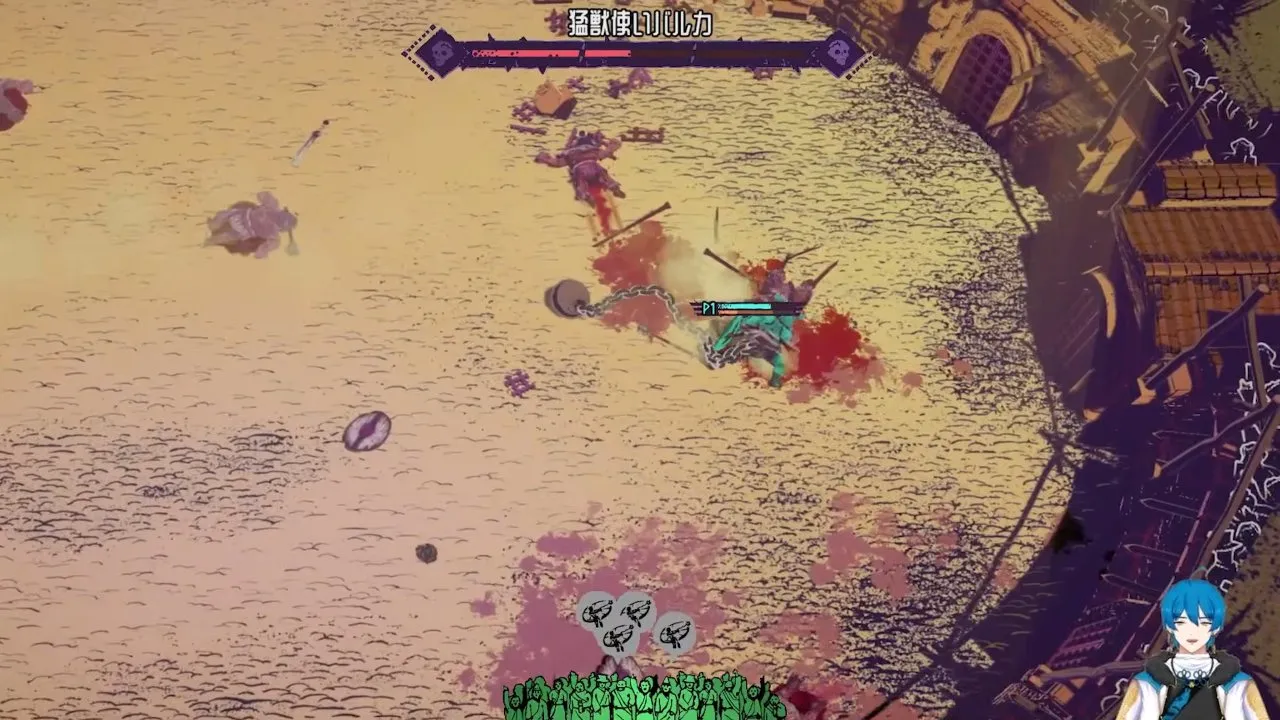
Before committing to a ranged attack, follow this sequence:
- Find a replacement weapon on the arena floor inside your reachable area.
- Aim your held weapon at the distant target.
- Throw it while you still have space to move toward the replacement.
- Pick up the spare before returning to melee.
Urns give you another throwing option. You can also throw enemies into objects or drive them toward spike walls and snake pits. Approach hazards with your own retreat on open ground; a teammate going after a dropped sword can pull the group toward the same danger. For more on those tools, see Chained Beasts weapons.
In a two-player fight, a chain trip gives your partner an opening without requiring both of you to throw away your weapons:
- Stand on opposite sides of an approaching enemy's path, with no pillar between you.
- Have one gladiator hold position as the anchor.
- Move the other sideways to pull the chain across the enemy's path.
- Attack the knocked-down enemy, or execute when nearby opponents leave room.
The anchor can keep a weapon ready while the moving player creates the opening. With more teammates, call your direction before crossing someone else's position. That small bit of coordination matters when several players share the tether.
If the chain wraps around a pillar, retrace the movement that caught it. Keep the other attached gladiator near the pillar while you unwind; pulling farther away keeps tension on the obstruction.
What should you change between arena battles?
Spend the coins you actually earned and choose skills that support the attacks you are already using. The scorecard shows Variety, Tempo and Carnage, along with health lost and Crowd Favorite. Those ratings do not promise a fixed coin payout, so check your balance before planning a purchase.
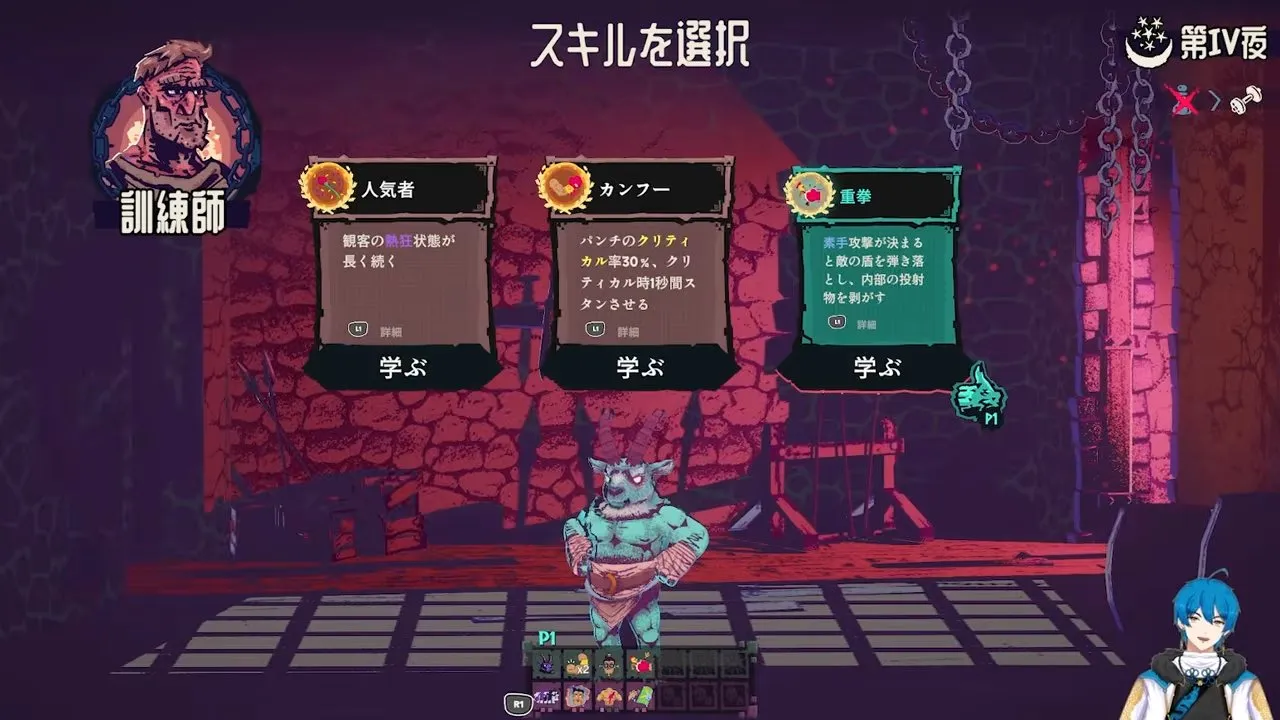
A low Variety result gives you a practical adjustment for the next arena: mix a weapon throw or environmental attack into your melee routine. Avoid changing your whole plan just to chase a rating if the new action leaves you unable to retrieve a weapon.
| Skill | Effect | When it fits |
|---|---|---|
| Strong Arm | Adds 50% throw damage | You regularly throw and can reach another weapon afterward. |
| Concussive Strength | Adds 50% stun duration | You regularly stun enemies and attack during the opening. |
| On a Roll | Grants four seconds of invulnerability after a kill while the crowd is going wild | You can secure kills during that crowd state. |
Trainer offers vary, so choose among the cards in front of you instead of counting on a particular first-night skill. On a Roll also needs both a kill and the crowd condition; do not treat it as protection whenever you approach an enemy.
How do you handle Germania's traps and Goliath?
Throw enemies into Germania's spike traps, and leave a clear escape route before approaching Goliath. The spikes can impale enemies, turning the arena itself into an attack option.
Goliath uses unpredictable jumps and ground slams that you need to dodge. Before closing in, look at the open space behind you and the path of your chain. A pillar can limit how far the tether moves, leaving less room to escape even when the ground looks clear.
Keep your group in an open part of the arena and the chain visible between players. If your partner is on the other side of a pillar, sort out the tether before approaching the boss. The useful preparation here is space: your route away from a slam needs to remain reachable when Goliath moves.
Should you treat afflictions or take augmentations between acts?
Prioritize treating an affliction when it interferes with an action your build relies on; consider an augmentation when its new skill suits your fighting plan. The Surgeon offers both services between acts, and every procedure has a cost.
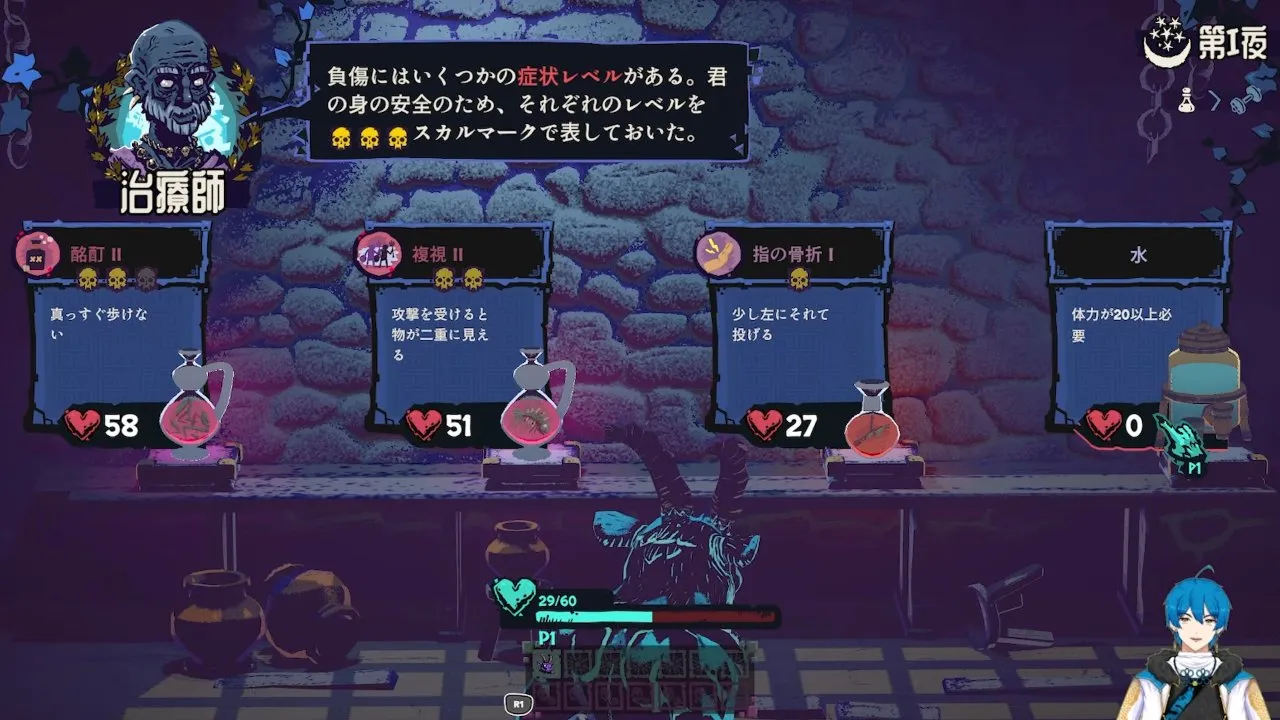
Treat an affliction when it disrupts your main action
Treatment is the recommended priority when an affliction makes necessary movement or visibility difficult. Healing potions can keep you alive but carry penalties into later fights, so read the effect before accepting one. The Chained Beasts afflictions page helps you compare those consequences.
Annoying makes nearby allies attack often, so leave room around the affected gladiator. Impulsive forces a skill choice every second level and a purchase at every shop, affecting both progression and savings. Infatuated makes the camera follow a particular ally and gives you 10% extra damage when that ally looks at you; stay near the shared fighting area rather than chasing away from the camera's focus.
Take an augmentation when its skill supports your plan
A body augmentation grants a new skill. Weigh its cost against the actions you can already perform reliably, including any restrictions from your afflictions. A throwing plan still needs accessible replacement weapons, even when its skills improve damage. Match that choice to your Chained Beasts best build before entering the next act.
Who do you face when the run reaches Rome?
Rome brings you to Praefectus and his Praetorian Guard in the final chapter. You arrive after Carthage and Germania, carrying forward the skills, equipment and afflictions accumulated along the run.
Reaching Rome puts you in the last regional stretch. For your next encounter, continue to Chained Beasts bosses and focus your preparation on the opponent ahead.